Text
Spoken Explanation – Iliad 22
Book Twenty-Two of Homer’s Iliad is one of the darkest and most decisive moments of the entire story. The long conflict between Achilles and Hector finally reaches its end.
Our eight pieces follow this tragedy step by step.
The first song, “Before the Scaean Gate,” begins with Hector standing alone outside the walls of Troy. Priam and Hecuba beg him to come back inside. Hector knows that Achilles is approaching, and for a moment he considers whether he might still avoid the confrontation. But pride, responsibility, and fear hold him where he is.
In “Three Times Around the Walls,” courage gives way to instinct. Hector runs. Achilles pursues him around the walls of Troy three times. The scene is extraordinary because Homer allows his greatest Trojan warrior to be completely human. Hector is not a symbol at this moment. He is a man who wants to live.
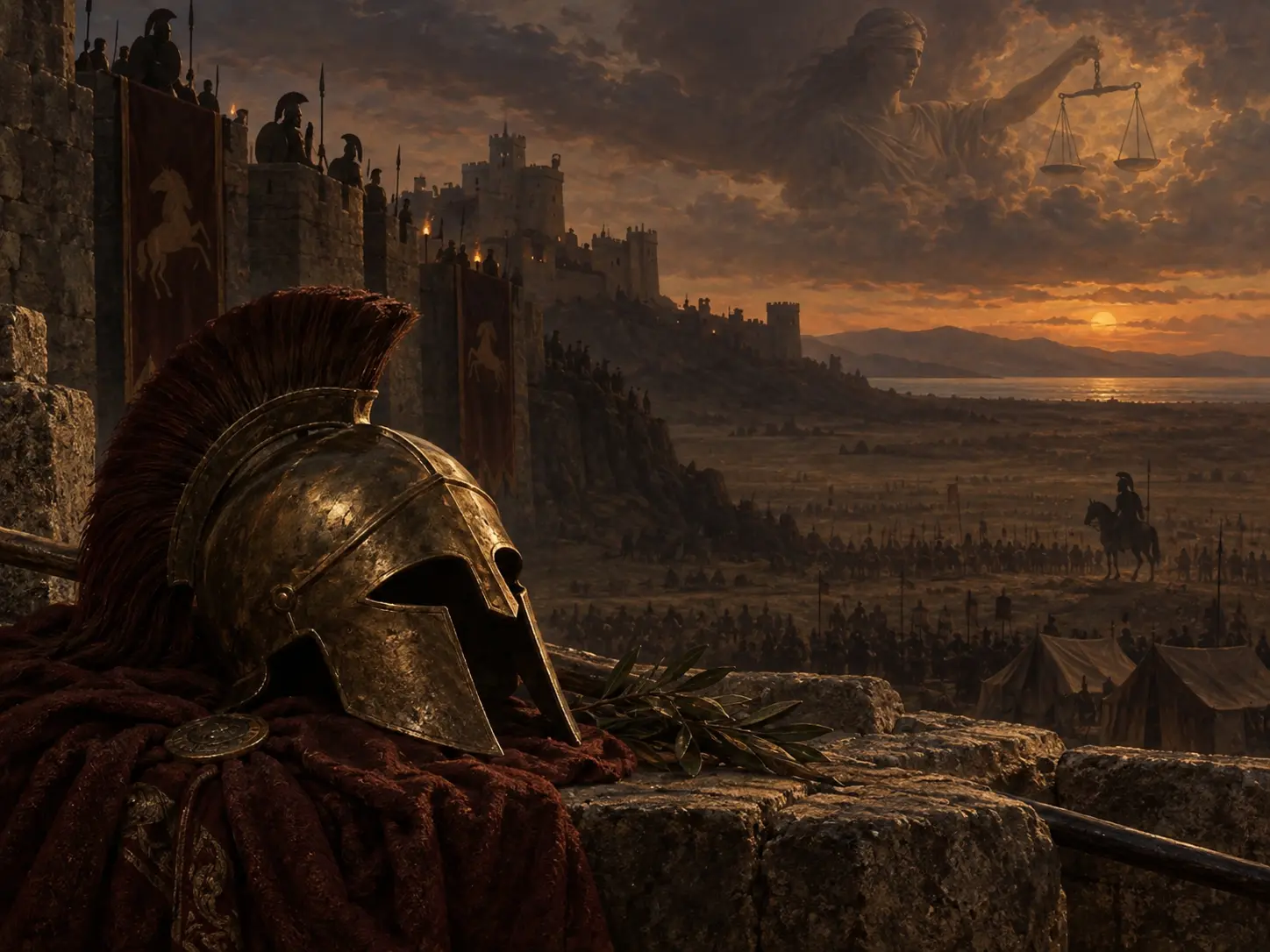
The third piece, “The Scales of Zeus,” moves the story from the battlefield to the realm of the gods. Zeus weighs the fates of Achilles and Hector. Hector’s side of the balance falls. His death has been decided, and Apollo, who protected him for so long, can no longer save him.
Then comes “A Brother Who Was Not There.” Athena appears to Hector in the form of his brother Deiphobus. Believing that he finally has someone beside him, Hector stops running and turns to face Achilles. Only after throwing his spear does he discover the truth. He calls to Deiphobus for another weapon, but nobody answers. At that moment Hector understands that the gods have deceived him and that his death is near.
In “No Covenant Between Lions and Men,” Hector asks Achilles for one final agreement. Whoever dies should be returned to his family for burial. Achilles refuses. His grief for Patroclus has become a hatred that no ordinary rule of humanity can restrain. There will be no agreement and no mercy.
The sixth song, “Hector Falls,” is the center of our musical version of Book Twenty-Two. Hector knows that he cannot escape, but he chooses to fight. Achilles finds the vulnerable place in Hector’s armor and drives his spear through his throat. Even while dying, Hector begs once more for his body to be returned to Troy. Achilles refuses again. Hector then foretells that Achilles himself will soon die near the Scaean Gate.
But Hector’s death does not end Achilles’ anger.
In “Behind the Chariot,” Achilles strips Hector’s armor, pierces his heels, ties the body behind his chariot, and drags it across the plain. The scene is deliberately disturbing. Achilles has won the duel, but Homer shows us that victory and humanity are no longer the same thing. Revenge has carried Achilles beyond the limits that normally separate the living from the dead.
The final piece, “Andromache Hears the Cry,” takes us away from Achilles and back inside Troy. Andromache does not yet know what has happened. She is at home, preparing for Hector’s return. Then she hears the cries from the walls.
She runs outside and sees her husband’s body being dragged behind Achilles’ chariot.
Her grief is not only for Hector. She immediately understands what his death means for their child, for herself, and ultimately for Troy. Without Hector, the city has lost its greatest defender.
Book Twenty-Two therefore ends without any true sense of victory.
Achilles has defeated Hector, but Patroclus is still dead. Hector has fallen, but Troy still stands. And behind all the glory, courage, rage, and divine intervention, Homer leaves us with something much simpler and more painful:
a father has lost his son,
a wife has lost her husband,
a child has lost his father,
and a city has begun to understand that its end is approaching.
This is the tragedy of Book Twenty-Two of the Iliad.
Translations
Deutsch
Gesprochene Erläuterung – Ilias 22
Der zweiundzwanzigste Gesang von Homers Ilias gehört zu den dunkelsten und entscheidendsten Augenblicken der gesamten Erzählung. Der lange Konflikt zwischen Achilleus und Hektor findet schließlich sein Ende.
Unsere acht Stücke folgen dieser Tragödie Schritt für Schritt.
Das erste Lied, „Before the Scaean Gate“, beginnt mit Hektor, der allein außerhalb der Mauern Trojas steht. Priamos und Hekabe flehen ihn an, wieder hereinzukommen. Hektor weiß, dass Achilleus sich nähert, und einen Augenblick lang überlegt er, ob er der Begegnung noch entgehen könnte. Doch Stolz, Verantwortung und Angst halten ihn an seinem Platz.
In „Three Times Around the Walls“ weicht der Mut dem Instinkt. Hektor läuft. Achilleus verfolgt ihn dreimal um die Mauern Trojas. Diese Szene ist außergewöhnlich, weil Homer seinen größten trojanischen Krieger ganz und gar menschlich sein lässt. Hektor ist in diesem Augenblick kein Symbol. Er ist ein Mann, der leben will.
Das dritte Stück, „The Scales of Zeus“, verlegt die Handlung vom Schlachtfeld in die Welt der Götter. Zeus wiegt die Schicksale von Achilleus und Hektor. Hektors Seite der Waage sinkt. Sein Tod ist entschieden, und Apollon, der ihn so lange beschützt hat, kann ihn nicht länger retten.
Dann folgt „A Brother Who Was Not There“. Athena erscheint Hektor in der Gestalt seines Bruders Deiphobos. Weil Hektor glaubt, endlich jemanden an seiner Seite zu haben, hört er auf zu laufen und stellt sich Achilleus. Erst nachdem er seinen Speer geworfen hat, entdeckt er die Wahrheit. Er ruft Deiphobos nach einer weiteren Waffe, aber niemand antwortet. In diesem Augenblick begreift Hektor, dass die Götter ihn getäuscht haben und sein Tod nahe ist.
In „No Covenant Between Lions and Men“ bittet Hektor Achilleus um eine letzte Vereinbarung. Wer auch immer stirbt, soll seiner Familie zur Bestattung zurückgegeben werden. Achilleus lehnt ab. Seine Trauer um Patroklos ist zu einem Hass geworden, den keine gewöhnliche Regel der Menschlichkeit mehr zügeln kann. Es wird keine Vereinbarung und keine Gnade geben.
Das sechste Lied, „Hector Falls“, bildet das Zentrum unserer musikalischen Fassung des zweiundzwanzigsten Gesangs. Hektor weiß, dass er nicht entkommen kann, entscheidet sich aber zu kämpfen. Achilleus findet die verwundbare Stelle in Hektors Rüstung und stößt den Speer durch seine Kehle. Selbst im Sterben bittet Hektor noch einmal darum, seinen Körper Troja zurückzugeben. Achilleus lehnt erneut ab. Darauf prophezeit Hektor, dass Achilleus selbst bald am Skäischen Tor sterben werde.
Doch Hektors Tod beendet Achilleus’ Zorn nicht.
In „Behind the Chariot“ nimmt Achilleus Hektor die Rüstung ab, durchbohrt seine Fersen, bindet den Körper hinter seinen Wagen und schleift ihn über die Ebene. Die Szene ist bewusst verstörend. Achilleus hat den Zweikampf gewonnen, doch Homer zeigt uns, dass Sieg und Menschlichkeit nicht länger dasselbe sind. Die Rache hat Achilleus über die Grenze hinausgetragen, die gewöhnlich die Lebenden von den Toten trennt.
Das letzte Stück, „Andromache Hears the Cry“, führt uns fort von Achilleus und zurück in das Innere Trojas. Andromache weiß noch nicht, was geschehen ist. Sie ist zu Hause und bereitet Hektors Rückkehr vor. Dann hört sie die Schreie von den Mauern.
Sie läuft hinaus und sieht den Körper ihres Mannes hinter Achilleus’ Wagen.
Ihre Trauer gilt nicht nur Hektor. Sie begreift sofort, was sein Tod für ihr Kind, für sie selbst und schließlich für Troja bedeutet. Ohne Hektor hat die Stadt ihren größten Verteidiger verloren.
Der zweiundzwanzigste Gesang endet daher ohne jedes echte Gefühl eines Sieges.
Achilleus hat Hektor besiegt, aber Patroklos ist noch immer tot. Hektor ist gefallen, doch Troja steht noch. Und hinter all dem Ruhm, dem Mut, dem Zorn und dem Eingreifen der Götter hinterlässt Homer uns etwas viel Einfacheres und Schmerzlicheres:
Ein Vater hat seinen Sohn verloren,
eine Frau ihren Mann,
ein Kind seinen Vater,
und eine Stadt beginnt zu verstehen, dass ihr Ende naht.
Das ist die Tragödie des zweiundzwanzigsten Gesangs der Ilias.
Español
Explicación hablada – Ilíada 22
El canto vigesimosegundo de la Ilíada de Homero es uno de los momentos más oscuros y decisivos de toda la historia. El largo conflicto entre Aquiles y Héctor llega por fin a su desenlace.
Nuestras ocho piezas siguen esta tragedia paso a paso.
La primera canción, «Before the Scaean Gate», comienza con Héctor solo fuera de las murallas de Troya. Príamo y Hécuba le suplican que vuelva adentro. Héctor sabe que Aquiles se acerca y, por un instante, considera si aún podría evitar el enfrentamiento. Pero el orgullo, la responsabilidad y el miedo lo mantienen donde está.
En «Three Times Around the Walls», el valor cede al instinto. Héctor corre. Aquiles lo persigue tres veces alrededor de las murallas de Troya. La escena es extraordinaria porque Homero permite que su mayor guerrero troyano sea completamente humano. En ese momento Héctor no es un símbolo. Es un hombre que quiere vivir.
La tercera pieza, «The Scales of Zeus», traslada la historia del campo de batalla al reino de los dioses. Zeus pesa los destinos de Aquiles y Héctor. El lado de Héctor en la balanza desciende. Su muerte ha sido decidida y Apolo, que lo protegió durante tanto tiempo, ya no puede salvarlo.
Después llega «A Brother Who Was Not There». Atenea se presenta ante Héctor con la forma de su hermano Deífobo. Creyendo que por fin tiene a alguien a su lado, Héctor deja de correr y se vuelve para afrontar a Aquiles. Solo después de lanzar su lanza descubre la verdad. Llama a Deífobo para pedirle otra arma, pero nadie responde. En ese momento Héctor comprende que los dioses lo han engañado y que su muerte está cerca.
En «No Covenant Between Lions and Men», Héctor pide a Aquiles un último acuerdo. Quien muera deberá ser devuelto a su familia para recibir sepultura. Aquiles se niega. Su dolor por Patroclo se ha convertido en un odio que ninguna regla ordinaria de humanidad puede contener. No habrá acuerdo ni misericordia.
La sexta canción, «Hector Falls», es el centro de nuestra versión musical del canto vigesimosegundo. Héctor sabe que no puede escapar, pero elige luchar. Aquiles encuentra el lugar vulnerable de su armadura y hunde la lanza en su garganta. Incluso mientras muere, Héctor vuelve a suplicar que su cuerpo sea devuelto a Troya. Aquiles se niega otra vez. Entonces Héctor predice que el propio Aquiles morirá pronto cerca de la Puerta Escea.
Pero la muerte de Héctor no pone fin a la ira de Aquiles.
En «Behind the Chariot», Aquiles despoja a Héctor de la armadura, le perfora los talones, ata el cuerpo detrás del carro y lo arrastra por la llanura. La escena es deliberadamente perturbadora. Aquiles ha ganado el duelo, pero Homero nos muestra que la victoria y la humanidad ya no son lo mismo. La venganza ha llevado a Aquiles más allá de los límites que normalmente separan a los vivos de los muertos.
La última pieza, «Andromache Hears the Cry», nos aleja de Aquiles y nos devuelve al interior de Troya. Andrómaca aún no sabe lo ocurrido. Está en casa, preparando el regreso de Héctor. Entonces oye los gritos procedentes de las murallas.
Sale corriendo y ve el cuerpo de su marido arrastrado detrás del carro de Aquiles.
Su dolor no es solo por Héctor. Comprende de inmediato lo que su muerte significa para su hijo, para ella misma y, en último término, para Troya. Sin Héctor, la ciudad ha perdido a su mayor defensor.
Por eso el canto vigesimosegundo termina sin ninguna verdadera sensación de victoria.
Aquiles ha derrotado a Héctor, pero Patroclo sigue muerto. Héctor ha caído, pero Troya aún se alza. Y detrás de toda la gloria, el valor, la furia y la intervención divina, Homero nos deja algo mucho más sencillo y doloroso:
un padre ha perdido a su hijo,
una esposa ha perdido a su marido,
un niño ha perdido a su padre,
y una ciudad empieza a comprender que su final se acerca.
Esta es la tragedia del canto vigesimosegundo de la Ilíada.
Français
Explication parlée – Iliade 22
Le vingt-deuxième chant de l’Iliade d’Homère est l’un des moments les plus sombres et les plus décisifs de toute l’histoire. Le long conflit entre Achille et Hector atteint enfin son terme.
Nos huit pièces suivent cette tragédie pas à pas.
La première chanson, « Before the Scaean Gate », commence avec Hector seul devant les murs de Troie. Priam et Hécube le supplient de rentrer. Hector sait qu’Achille approche et, pendant un instant, il se demande s’il pourrait encore éviter l’affrontement. Mais l’orgueil, la responsabilité et la peur le retiennent là où il est.
Dans « Three Times Around the Walls », le courage cède à l’instinct. Hector court. Achille le poursuit trois fois autour des murs de Troie. La scène est extraordinaire parce qu’Homère permet à son plus grand guerrier troyen d’être entièrement humain. À cet instant Hector n’est pas un symbole. C’est un homme qui veut vivre.
La troisième pièce, « The Scales of Zeus », transporte le récit du champ de bataille au royaume des dieux. Zeus pèse les destins d’Achille et d’Hector. Le plateau d’Hector descend. Sa mort a été décidée et Apollon, qui l’a protégé si longtemps, ne peut plus le sauver.
Vient ensuite « A Brother Who Was Not There ». Athéna apparaît à Hector sous les traits de son frère Déiphobe. Croyant avoir enfin quelqu’un à ses côtés, Hector cesse de courir et se retourne pour affronter Achille. Ce n’est qu’après avoir lancé sa lance qu’il découvre la vérité. Il appelle Déiphobe pour obtenir une autre arme, mais personne ne répond. À cet instant, Hector comprend que les dieux l’ont trompé et que sa mort est proche.
Dans « No Covenant Between Lions and Men », Hector demande à Achille un dernier accord. Celui qui mourra devra être rendu à sa famille pour recevoir une sépulture. Achille refuse. Son deuil pour Patrocle est devenu une haine qu’aucune règle ordinaire d’humanité ne peut retenir. Il n’y aura ni accord ni pitié.
La sixième chanson, « Hector Falls », est le centre de notre version musicale du vingt-deuxième chant. Hector sait qu’il ne peut s’échapper, mais il choisit de combattre. Achille trouve l’endroit vulnérable dans l’armure d’Hector et enfonce sa lance dans sa gorge. Même en mourant, Hector supplie encore que son corps soit rendu à Troie. Achille refuse de nouveau. Hector prédit alors qu’Achille lui-même mourra bientôt près de la porte Scée.
Mais la mort d’Hector ne met pas fin à la colère d’Achille.
Dans « Behind the Chariot », Achille dépouille Hector de son armure, lui perce les talons, attache son corps derrière son char et le traîne sur la plaine. La scène est délibérément troublante. Achille a remporté le duel, mais Homère nous montre que la victoire et l’humanité ne sont plus la même chose. La vengeance a emporté Achille au-delà des limites qui séparent normalement les vivants des morts.
La dernière pièce, « Andromache Hears the Cry », nous éloigne d’Achille et nous ramène à l’intérieur de Troie. Andromaque ne sait pas encore ce qui s’est passé. Elle est chez elle et prépare le retour d’Hector. Puis elle entend les cris qui viennent des murs.
Elle court dehors et voit le corps de son mari traîné derrière le char d’Achille.
Son chagrin ne concerne pas seulement Hector. Elle comprend immédiatement ce que sa mort signifie pour leur enfant, pour elle-même et, finalement, pour Troie. Sans Hector, la ville a perdu son plus grand défenseur.
Le vingt-deuxième chant se termine donc sans aucun véritable sentiment de victoire.
Achille a vaincu Hector, mais Patrocle est toujours mort. Hector est tombé, mais Troie se dresse encore. Et derrière toute la gloire, le courage, la rage et l’intervention divine, Homère nous laisse quelque chose de beaucoup plus simple et de plus douloureux :
un père a perdu son fils,
une épouse a perdu son mari,
un enfant a perdu son père,
et une ville commence à comprendre que sa fin approche.
Telle est la tragédie du vingt-deuxième chant de l’Iliade.
Reflection
English
The explanation reveals the architecture of Book Twenty-Two: fear, pursuit, divine judgment, deception, failed law, death, desecration, and lament. Each movement narrows Hector’s world.
Yet the book does not end with the winner. By returning to Andromache and Troy, Homer measures heroic glory against the lives broken around it and refuses a simple triumph.
Textual basis
Homer, Iliad, Book XXII, lines 25–515.
Reference edition used
Homer, Ilias. Griechisch–deutsch. German translation from the ancient Greek by Hans Rupé, 16th edition, Akademie Verlag, Berlin, 2013.
Deutsch
Die Erläuterung macht die Architektur des zweiundzwanzigsten Gesangs sichtbar: Angst, Verfolgung, Götterurteil, Täuschung, gescheitertes Recht, Tod, Schändung und Klage. Jede Bewegung verengt Hektors Welt.
Doch der Gesang endet nicht beim Sieger. Mit der Rückkehr zu Andromache und Troja misst Homer den heroischen Ruhm an den Leben, die um ihn herum zerbrechen, und verweigert einen einfachen Triumph.
Textgrundlage
Homer, Ilias, Gesang XXII, Verse 25–515.
Verwendete Referenzausgabe
Homer, Ilias. Griechisch–deutsch. Übertragen von Hans Rupé, 16. Auflage, Akademie Verlag, Berlin 2013.
Español
La explicación revela la arquitectura del canto vigesimosegundo: miedo, persecución, juicio divino, engaño, ley fracasada, muerte, ultraje y lamento. Cada movimiento estrecha el mundo de Héctor.
Pero el canto no termina con el vencedor. Al volver a Andrómaca y Troya, Homero mide la gloria heroica frente a las vidas quebradas a su alrededor y rechaza un triunfo sencillo.
Base textual
Homero, Ilíada, canto XXII, versos 25–515.
Edición de referencia utilizada
Homer, Ilias. Griechisch–deutsch. Traducción alemana del griego antiguo de Hans Rupé, 16.ª edición, Akademie Verlag, Berlín, 2013.
Français
L’explication révèle l’architecture du vingt-deuxième chant : peur, poursuite, jugement divin, tromperie, loi refusée, mort, profanation et plainte. Chaque mouvement rétrécit le monde d’Hector.
Mais le chant ne se termine pas avec le vainqueur. En revenant à Andromaque et à Troie, Homère mesure la gloire héroïque aux vies brisées autour d’elle et refuse un triomphe simple.
Base textuelle
Homère, Iliade, chant XXII, vers 25–515.
Édition de référence utilisée
Homer, Ilias. Griechisch–deutsch. Traduction allemande du grec ancien par Hans Rupé, 16e édition, Akademie Verlag, Berlin, 2013.