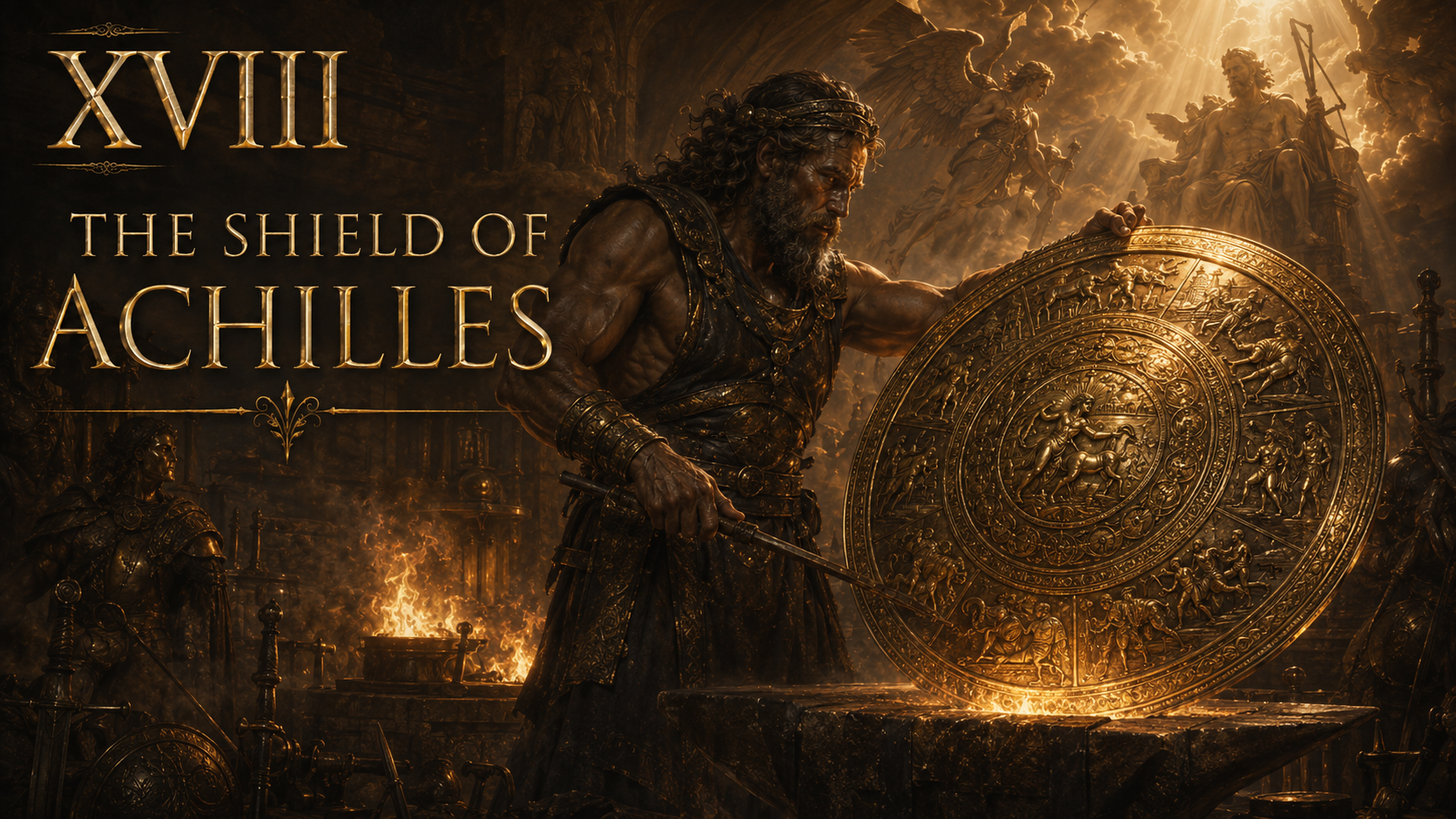
Lyrics
Far beneath the mortal shore,
Where the light can fall no more,
I heard a cry descend through stone
And knew the voice was of my own.
The waters trembled in my hall.
The silver currents ceased to fall.
Around me rose the deathless sea,
And all its daughters looked at me.
[Verse 1]
They gathered from the coral caves,
From hidden springs and ancient waves,
From every place where waters sleep,
The shining daughters of the deep.
They saw the sorrow in my face.
No godly calm remained in place.
Before a single word was said,
I knew that someone he loved was dead.
[Pre-Chorus]
No mortal cry should reach so far.
No grief should shake the evening star.
But through the earth and through the foam,
My son had called his mother home.
[Chorus]
Daughters of the deep, rise with me.
Leave the silence of the sea.
Through the darkness, through the foam,
I must go and find my son.
Daughters of the deep, follow near.
I have heard the voice I fear.
Though a goddess cannot weep,
Grief has entered even the deep.
[Verse 2]
We rose where sea and shoreline meet.
The black waves broke around my feet.
I found him fallen by the ships,
With dust and ashes on his limbs.
His golden hair was torn and grey.
His strength had left him where he lay.
No spear had pierced his mighty chest,
Yet grief had crushed him to the earth.
[Verse 3]
He told me that his friend had died,
The man who always stood beside
His anger, loneliness and pride,
The gentler soul he could not hide.
Patroclus wore Achilles’ name.
He wore his armour into flame.
Now Hector carried off the bronze,
And left the fallen man alone.
My son declared that he would rise,
That Hector soon would close his eyes.
He spoke of vengeance, blood and fire,
As though his grief were now his pyre.
[Pre-Chorus]
I knew the thread the Fates had spun.
I knew the ending of my son.
The moment Hector ceased to breathe,
Achilles too would have to leave.
[Chorus]
Daughters of the deep, mourn with me.
Nothing living can be free
From the measure, from the thread,
From the road that waits ahead.
Daughters of the deep, hear my fear.
His final hour is drawing near.
Though a goddess knows his fate,
A mother still will beg him wait.
[Bridge]
I warned him of the price of blood.
I spoke the words no mother should.
If Hector fell beneath his hand,
His own death waited in that land.
But grief had closed his heart to fear.
Patroclus’ shade was standing near.
He said that life had lost its worth
If he remained upon the earth.
He could not save the one he loved.
No gift below or power above
Could call his fallen brother home.
He chose the road he knew alone.
He chose the battle and the spear.
He chose the death already near.
He chose to burn beneath the sky
Rather than live and let grief die.
[Instrumental Rise]
[Verse 4]
Yet Hector wore the armour still,
The bronze once carried by Peleus’ will.
I knew a god whose fires burned
Beyond the roads where stars had turned.
Hephaestus, whom I sheltered once,
Would hear the mother of my son.
[Final Chorus]
Daughters of the deep, remain.
I must leave the ocean plain.
Where the deathless anvils ring,
I will seek the forge-born king.
Daughters of the deep, farewell.
Guard the silent ocean well.
I will cross the halls of flame
And bring back armour for his name.
I cannot change the thread of fate.
I cannot close the final gate.
But while my son still draws his breath,
I will not send him bare to death.
[Outro]
Behind me lay the grieving shore.
Before me burned the godly forge.
Above the sea, my son remained,
Alone with love, alone with pain.
The waters closed where I had been.
The daughters watched and followed him.
And far beyond the mortal sky,
A hammer struck—
And fire replied.
Translations
English
The original English lyrics are shown in the Lyrics section above.
Deutsch
Thetis hört Achilleus’ Klage und steigt mit den Nereiden aus dem Meer. Achilleus erklärt, dass er Hektor töten will, obwohl dies seinen eigenen Tod näher bringt; Thetis verspricht, bei Hephaistos eine neue Rüstung zu erbitten.
Español
Tetis oye el lamento de Aquiles y emerge del mar con las Nereidas. Aquiles declara que matará a Héctor aunque eso acerque su propia muerte; Tetis promete pedir a Hefesto una nueva armadura.
Français
Thétis entend la plainte d’Achille et sort de la mer avec les Néréides. Achille déclare qu’il tuera Hector même si cela rapproche sa propre mort ; Thétis promet de demander une nouvelle armure à Héphaïstos.
English
Thetis possesses divine knowledge but not the power to spare her son from a choice he freely embraces. Her answer is therefore painfully practical: if she cannot stop fate, she can at least keep Achilles from meeting it unarmed.
Textual basis
Homer, Iliad, Book XVIII, lines 35–147.
Reference edition used
Homer, Ilias. Griechisch–deutsch. Translated into German from the ancient Greek by Hans Rupé, 16th edition, Akademie Verlag, Berlin, 2013.
Deutsch
Thetis besitzt göttliches Wissen, aber nicht die Macht, ihren Sohn vor einer Entscheidung zu bewahren, die er selbst annimmt. Ihre Antwort ist deshalb schmerzlich praktisch: Kann sie das Schicksal nicht aufhalten, so will sie Achilleus ihm wenigstens nicht ungerüstet entgegenschicken.
Textgrundlage
Homer, Ilias, Gesang XVIII, Verse 35–147.
Verwendete Referenzausgabe
Homer, Ilias. Griechisch–deutsch. Übertragen von Hans Rupé, 16. Auflage, Akademie Verlag, Berlin 2013.
Español
Tetis posee conocimiento divino, pero no el poder de librar a su hijo de una decisión que él acepta libremente. Su respuesta es dolorosamente práctica: si no puede detener el destino, al menos no dejará que Aquiles lo afronte desarmado.
Base textual
Homero, Ilíada, canto XVIII, versos 35–147.
Edición de referencia utilizada
Homer, Ilias. Griechisch–deutsch. Traducción alemana del griego antiguo de Hans Rupé, 16.ª edición, Akademie Verlag, Berlín, 2013.
Français
Thétis possède le savoir divin, mais non le pouvoir d’arracher son fils à un choix qu’il accepte librement. Sa réponse est douloureusement concrète : si elle ne peut arrêter le destin, elle empêchera au moins Achille de l’affronter sans armes.
Base textuelle
Homère, Iliade, chant XVIII, vers 35–147.
Édition de référence utilisée
Homer, Ilias. Griechisch–deutsch. Traduction allemande du grec ancien par Hans Rupé, 16e édition, Akademie Verlag, Berlin, 2013.