Lyrics
Dust rose high where the horses thundered
Bronze rang out beneath the sun
Men were falling, names were broken
Daylight burned on everyone
Far above the crying meadow
Where the clouds held back their rain
One great father watched in silence
As his own blood crossed the plain
He could shake the roots of heaven
He could darken every hill
But the thread was drawn already
And the turning wheel stood still
When Zeus looked down
The sky grew heavy
When Zeus looked down
No storm was enough
Even thunder
Cannot buy back morning
Even heaven
Must bow to love
Sarpedon came with royal courage
Not a shadow, not a ghost
He had led his men through iron
He had paid what honor cost
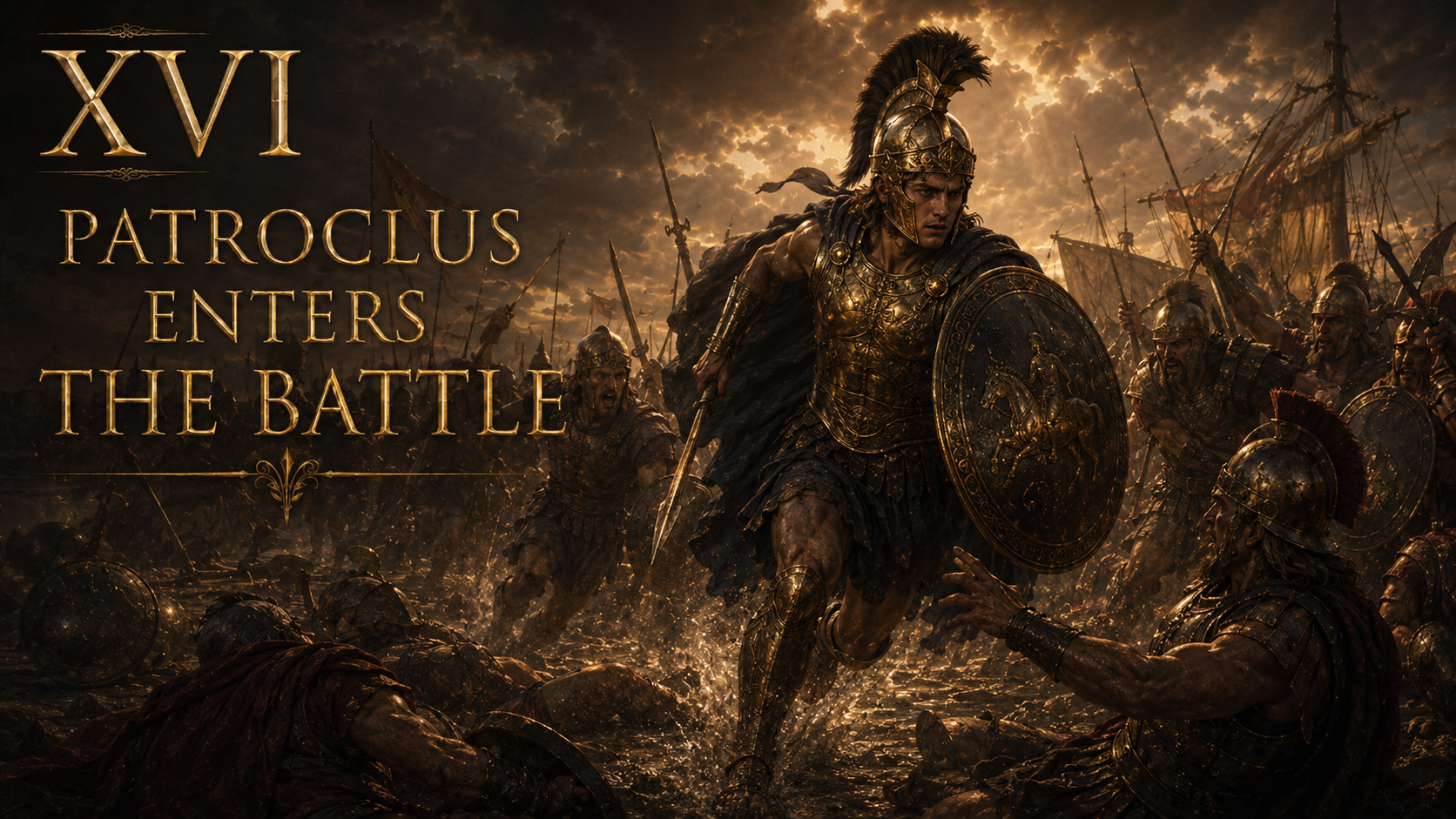
Patroclus met him in the battle
Borrowed fire against a king
Two bright lives beneath the sunlight
Locked inside a darker ring
Spears flew hard and shields were crying
Earth drank deep and would not speak
And the gods above the slaughter
Felt the salt of something weak
When Zeus looked down
The sky grew heavy
When Zeus looked down
No storm was enough
Even thunder
Cannot buy back morning
Even heaven
Must bow to love
Father, keep your crown of lightning
Father, keep your clouded throne
There are wounds no hand can cover
There are deaths you watch alone
Power bends the knees of armies
Power breaks the mountain stone
But it cannot turn the measure
When the final seed is sown
So the son of Zeus fell slowly
Like a cedar cut by flame
All his strength returned to silence
All his glory lost its name
When Zeus looked down
The sky grew heavy
When Zeus looked down
No storm was enough
Even thunder
Cannot buy back morning
Even heaven
Must bow to love
Blood and dust upon the armor
Sunlight fading from his eyes
Far away his homeland waited
Under softer foreign skies
Send him home through gentle darkness
Lift him from the teeth of war
Let no jackal learn his story
Let no dust claim what he bore
Sleep and Death will walk beside him
Past the screaming, past the spears
Carrying the fallen prince home
Through the smoke of mortal years
When Zeus looked down
The sky grew heavy
When Zeus looked down
No storm was enough
Even thunder
Cannot buy back morning
Even heaven
Must bow to love
And Patroclus still pressed onward
Mercy burning into pride
One more victory, one more danger
One more step beyond the tide
For the field had tasted thunder
And the field would ask for more
Every triumph opened wider
Like a dark and hungry door
When Zeus looked down
The sky grew heavy
When Zeus looked down
No storm was enough
Even thunder
Cannot buy back morning
Even heaven
Must bow to love
Even thunder
Cannot save the falling
Even heaven
Must watch and grieve
Fate keeps walking
Through the dust and crying
Taking sons
The gods must leave
Translations
English
The original English lyrics are shown in the Lyrics section above.
Deutsch
Über der staubigen Ebene sieht Zeus, wie sein eigener Sohn Sarpedon in den Kampf gegen Patroklos tritt. Er könnte Berge erschüttern und den Himmel verdunkeln, doch der Lebensfaden ist bereits gezogen, und selbst Donner kann den Morgen nicht zurückkaufen.
Sarpedon kämpft königlich und mutig. Als er fällt, wird die Macht des Vaters zur Trauer eines Zuschauers. Herrschaft kann Heere beugen und Steine brechen, aber sie kann das Maß nicht umkehren, ohne die Ordnung aller Götter und Sterblichen zu gefährden.
Zeus sorgt dafür, dass Schlaf und Tod den gefallenen Sohn in die Heimat tragen. Patroklos drängt unterdessen weiter: Aus Barmherzigkeit wird Stolz, aus jedem Triumph eine neue dunkle Tür.
Español
Sobre la llanura polvorienta Zeus ve a su propio hijo Sarpedón entrar en combate contra Patroclo. Podría sacudir montañas y oscurecer el cielo, pero el hilo de la vida ya está tendido y ni siquiera el trueno puede comprar de nuevo la mañana.
Sarpedón combate con valor de rey. Cuando cae, el poder del padre se convierte en duelo de espectador. El dominio puede doblar ejércitos y quebrar piedras, pero no invertir la medida sin destruir el orden de dioses y mortales.
Zeus dispone que Sueño y Muerte lleven al hijo caído a su patria. Mientras tanto, Patroclo sigue avanzando: la compasión se acerca al orgullo y cada triunfo abre otra puerta oscura.
Français
Au-dessus de la plaine poussiéreuse, Zeus voit son propre fils Sarpédon affronter Patrocle. Il pourrait ébranler les montagnes et assombrir le ciel, mais le fil de la vie est déjà tendu et même le tonnerre ne peut racheter le matin.
Sarpédon combat avec le courage d’un roi. Lorsqu’il tombe, la puissance du père devient le deuil d’un spectateur. Le pouvoir peut courber les armées et briser la pierre, mais il ne peut renverser la mesure sans détruire l’ordre des dieux et des mortels.
Zeus ordonne au Sommeil et à la Mort de porter son fils dans sa patrie. Pendant ce temps, Patrocle poursuit sa course : la compassion se mêle à l’orgueil, et chaque triomphe ouvre une nouvelle porte sombre.
English
Zeus’ grief gives divine power an unexpected boundary. He is not powerless, yet he cannot save Sarpedon without making the order he governs meaningless. The scene turns sovereignty into restraint: the ruler proves his relation to justice by enduring the loss he has the strength to prevent.
Sarpedon’s death also mirrors what awaits Achilles and Patroclus. Love does not abolish mortality, whether the loving witness is a god or a friend. What remains possible is honouring the dead: Zeus cannot cancel the death, but he can protect the body and grant the fallen prince a passage home.
Textual basis
Homer, Iliad, Book XVI, lines 426–683: Zeus considers rescuing Sarpedon, accepts the decree of fate, and arranges for Sleep and Death to carry his son home after Patroclus kills him.
Reference edition used
Homer, Ilias. Griechisch–deutsch. Translated into German from the ancient Greek by Hans Rupé, 16th edition, Akademie Verlag, Berlin, 2013.
Deutsch
Die Trauer des Zeus gibt göttlicher Macht eine unerwartete Grenze. Er ist nicht machtlos, doch er kann Sarpedon nicht retten, ohne die von ihm beherrschte Ordnung bedeutungslos zu machen. Herrschaft wird hier zur Selbstbegrenzung: Der Herrscher beweist sein Verhältnis zur Gerechtigkeit, indem er einen Verlust aushält, den er verhindern könnte.
Sarpedons Tod spiegelt zugleich, was Achilleus und Patroklos erwartet. Liebe hebt die Sterblichkeit nicht auf – gleichgültig, ob ein Gott oder ein Freund liebt. Möglich bleibt die Ehrung des Toten: Zeus kann den Tod nicht widerrufen, aber den Körper schützen und dem gefallenen Fürsten die Heimkehr gewähren.
Textgrundlage
Homer, Ilias, Gesang XVI, Verse 426–683: Zeus erwägt Sarpedons Rettung, beugt sich dem Schicksal und lässt seinen von Patroklos getöteten Sohn durch Schlaf und Tod heimtragen.
Verwendete Referenzausgabe
Homer, Ilias. Griechisch–deutsch. Übertragen von Hans Rupé, 16. Auflage, Akademie Verlag, Berlin 2013.
Español
El dolor de Zeus impone un límite inesperado al poder divino. No carece de fuerza, pero no puede salvar a Sarpedón sin vaciar de sentido el orden que gobierna. La soberanía se convierte en autocontención: el gobernante demuestra su relación con la justicia soportando una pérdida que podría impedir.
La muerte de Sarpedón refleja también lo que espera a Aquiles y Patroclo. El amor no suprime la mortalidad, ya ame un dios o un amigo. Todavía es posible honrar al muerto: Zeus no puede anular la muerte, pero sí proteger el cuerpo y conceder al príncipe caído el regreso a casa.
Base textual
Homer, Ilíada, canto XVI, versos 426–683: Zeus considera salvar a Sarpedón, acepta el decreto del destino y dispone que Sueño y Muerte lleven a casa a su hijo muerto por Patroclo.
Edición de referencia utilizada
Homer, Ilias. Griechisch–deutsch. Traducción alemana del griego antiguo de Hans Rupé, 16.ª edición, Akademie Verlag, Berlín, 2013.
Français
Le chagrin de Zeus impose une limite inattendue à la puissance divine. Il n’est pas impuissant, mais ne peut sauver Sarpédon sans vider de sens l’ordre qu’il gouverne. La souveraineté devient retenue : le maître prouve son rapport à la justice en supportant une perte qu’il aurait la force d’empêcher.
La mort de Sarpédon reflète aussi ce qui attend Achille et Patrocle. L’amour n’abolit pas la mortalité, que celui qui aime soit dieu ou ami. Il reste possible d’honorer le mort : Zeus ne peut annuler la mort, mais il peut protéger le corps et accorder au prince tombé le retour vers sa patrie.
Base textuelle
Homer, Iliade, chant XVI, vers 426–683: Zeus envisage de sauver Sarpédon, accepte l’arrêt du destin et ordonne au Sommeil et à la Mort de ramener son fils tué par Patrocle.
Édition de référence utilisée
Homer, Ilias. Griechisch–deutsch. Traduction allemande du grec ancien par Hans Rupé, 16e édition, Akademie Verlag, Berlin, 2013.