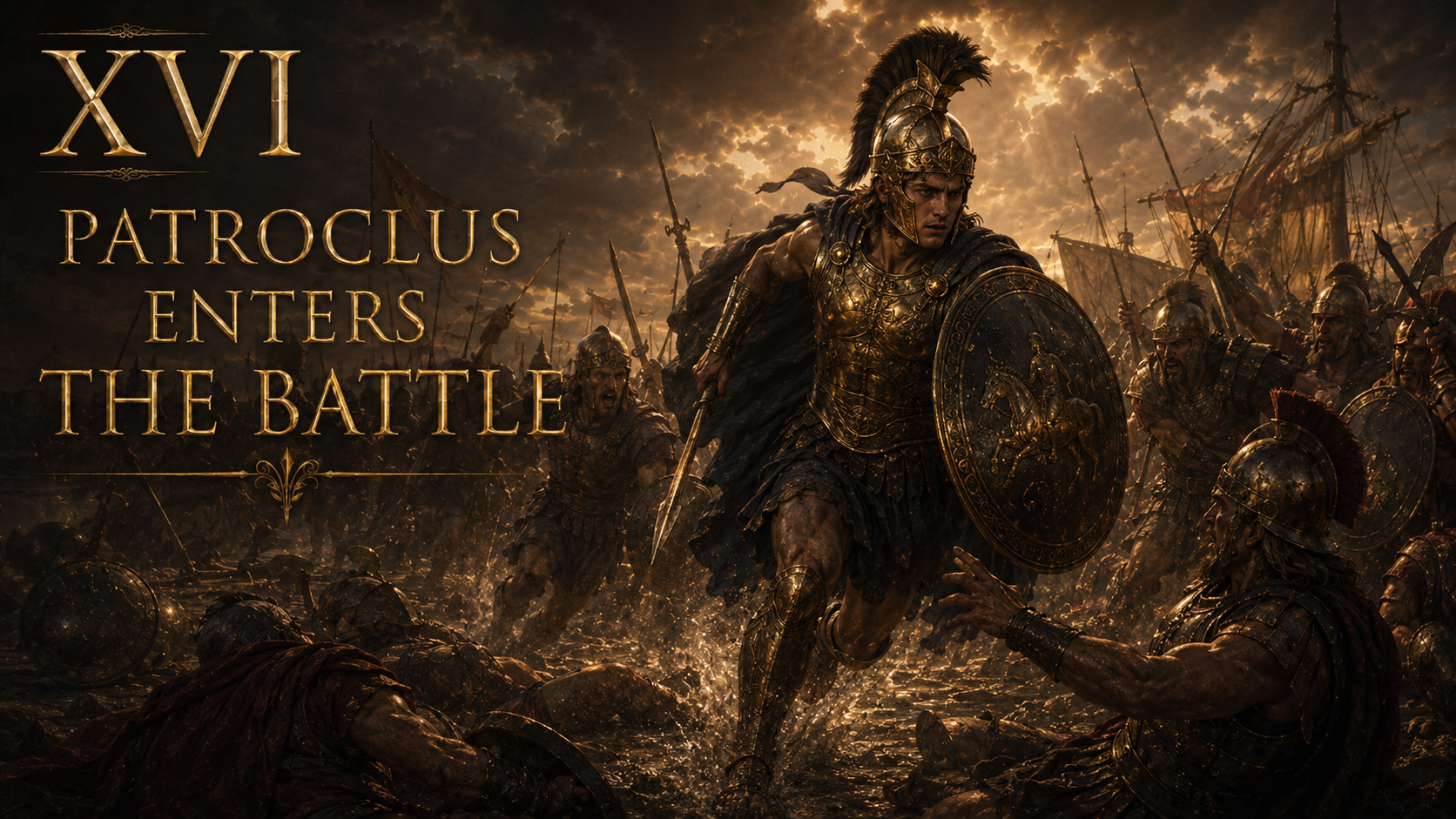
Lyrics
Take the bronze that knows my shoulders
Take the helm that blinds the sun
Let them think my rage is moving
Let them turn from you and run
Drive them back from burning timber
Drive them back from smoke and foam
Save the men who cry for mercy
Bring the living sailors home
But hear me now
Before the dust is lifted
Hear me now
Before the horses run
There is a line you must not cross
There is a fire you must not own
Turn back when the ships are breathing
Do not chase the walls of stone
There is a line you must not cross
There is a hunger in the plain
Win the day and leave the glory
Do not wear my wrath in vain
I know the sound of battle calling
I know how bright the red can shine
I know the taste of men retreating
I know the madness after wine
Victory whispers like a lover
Fame can open golden doors
But every door beyond the measure
Leads to gods and darker shores
So hear me now
While my hands still hold you
Hear me now
While the morning burns
There is a line you must not cross
There is a fire you must not own
Turn back when the ships are breathing
Do not chase the walls of stone
There is a line you must not cross
There is a hunger in the plain
Win the day and leave the glory
Do not wear my wrath in vain
I have sat too long in anger
I have fed it with my name
Now I give you my own shadow
Do not vanish in its flame
You are not my wounded silence
You are not my bitter crown
You go out to guard the helpless
Not to pull a city down
And if the Trojans break before you
If they scatter through the field
Let the river keep its murmurs
Let the distant towers yield
Do not follow shining terror
Do not answer every cry
Even courage has a border
Even brave men have to turn
There is a line you must not cross
There is a fire you must not own
Turn back when the ships are breathing
Do not chase the walls of stone
There is a line you must not cross
There is a hunger in the plain
Win the day and leave the glory
Do not wear my wrath in vain
Come back with dust upon your armor
Come back with smoke inside your hair
Come back laughing like a brother
Come back breathing open air
Leave the walls to darker omens
Leave the towers to their pride
Save the ships and save the wounded
Then return here to my side
There is a line you must not cross
There is a fire you must not own
Turn back when the ships are breathing
Do not chase the walls of stone
There is a line you must not cross
There is a hunger in the plain
Win the day and leave the glory
Do not wear my wrath in vain
Do not wear my wrath in vain
Do not wear my wrath in vain
Bring my fire back from the plain
Do not wear my wrath in vain
Translations
English
The original English lyrics are shown in the Lyrics section above.
Deutsch
Achilleus gibt Patroklos die Bronze, den sonnenblendenden Helm und die Gestalt seines Zorns. Die Trojaner sollen glauben, Achilleus selbst kehre zurück, damit die Schiffe und die verwundeten Männer gerettet werden.
Doch vor dem Aufbruch spricht Achilleus die entscheidende Warnung aus: Sobald die Schiffe wieder atmen, muss Patroklos umkehren. Sieg, Ruhm und die offene Ebene können wie Verführer wirken; jenseits des Maßes führen ihre Türen zu den Göttern und an dunklere Ufer.
Patroklos soll nicht zur verkörperten Kränkung seines Freundes werden. Er geht hinaus, um Hilflose zu schützen, nicht um eine Stadt zu stürzen. Achilleus wünscht sich seine Rückkehr – staubbedeckt, lebendig und lachend wie ein Bruder.
Español
Aquiles entrega a Patroclo el bronce, el casco que ciega al sol y la apariencia de su cólera. Los troyanos deben creer que el propio Aquiles ha regresado, para que las naves y los heridos puedan salvarse.
Pero antes de partir pronuncia la advertencia decisiva: cuando las naves vuelvan a respirar, Patroclo debe regresar. La victoria, la fama y la llanura abierta seducen; más allá de la medida, sus puertas conducen hacia los dioses y costas más oscuras.
Patroclo no debe convertirse en la ofensa encarnada de su amigo. Sale a proteger a los indefensos, no a derribar una ciudad. Aquiles desea que vuelva cubierto de polvo, vivo y riendo como un hermano.
Français
Achille remet à Patrocle le bronze, le casque qui aveugle le soleil et l’apparence de sa colère. Les Troyens doivent croire qu’Achille lui-même est revenu, afin que les nefs et les blessés soient sauvés.
Mais avant le départ, Achille prononce l’avertissement décisif : dès que les nefs respireront de nouveau, Patrocle devra revenir. La victoire, la renommée et la plaine ouverte séduisent ; au-delà de la mesure, leurs portes mènent vers les dieux et des rivages plus sombres.
Patrocle ne doit pas devenir l’offense incarnée de son ami. Il part protéger les êtres sans défense, non abattre une ville. Achille souhaite son retour, couvert de poussière, vivant et riant comme un frère.
English
Achilles’ warning distinguishes rescue from conquest. The mission has a clear purpose and a clear stopping point, because courage without measure can become indistinguishable from appetite. The boundary is ethical before it is geographical: Patroclus must remember whom he is trying to save and why.
The tragedy is sharpened because the warning is loving, precise, and understood. Nothing is hidden from Patroclus except the force the battlefield will exert on him. Homer shows that knowing a limit and keeping it are different human achievements, especially when success begins to feel like destiny.
Textual basis
Homer, Iliad, Book XVI, lines 69–100: Achilles authorizes the rescue but commands Patroclus to return once the ships are safe and not attack Troy.
Reference edition used
Homer, Ilias. Griechisch–deutsch. Translated into German from the ancient Greek by Hans Rupé, 16th edition, Akademie Verlag, Berlin, 2013.
Deutsch
Die Warnung des Achilleus unterscheidet Rettung von Eroberung. Der Auftrag hat einen klaren Zweck und einen klaren Endpunkt, denn Mut ohne Maß kann vom Begehren ununterscheidbar werden. Die Grenze ist zuerst ethisch und erst danach geografisch: Patroklos muss wissen, wen er retten will und warum.
Die Tragödie wird dadurch verschärft, dass diese Warnung liebevoll, präzise und verstanden ist. Verborgen bleibt Patroklos nur die Kraft, die das Schlachtfeld auf ihn ausüben wird. Homer zeigt, dass eine Grenze zu kennen und sie einzuhalten zwei verschiedene menschliche Leistungen sind – besonders wenn Erfolg sich plötzlich wie Schicksal anfühlt.
Textgrundlage
Homer, Ilias, Gesang XVI, Verse 69–100: Achilleus erlaubt die Rettung, befiehlt Patroklos aber, nach der Sicherung der Schiffe zurückzukehren und Troja nicht anzugreifen.
Verwendete Referenzausgabe
Homer, Ilias. Griechisch–deutsch. Übertragen von Hans Rupé, 16. Auflage, Akademie Verlag, Berlin 2013.
Español
La advertencia de Aquiles distingue el rescate de la conquista. La misión tiene un propósito y un final claros, porque el valor sin medida puede confundirse con el apetito. La frontera es ética antes que geográfica: Patroclo debe recordar a quién intenta salvar y por qué.
La tragedia se intensifica porque la advertencia es afectuosa, precisa y comprendida. Solo queda oculto el poder que ejercerá el campo de batalla sobre Patroclo. Homero muestra que conocer un límite y respetarlo son logros humanos distintos, sobre todo cuando el éxito empieza a sentirse como destino.
Base textual
Homer, Ilíada, canto XVI, versos 69–100: Aquiles autoriza el rescate, pero ordena a Patroclo regresar cuando las naves estén seguras y no atacar Troya.
Edición de referencia utilizada
Homer, Ilias. Griechisch–deutsch. Traducción alemana del griego antiguo de Hans Rupé, 16.ª edición, Akademie Verlag, Berlín, 2013.
Français
L’avertissement d’Achille distingue le secours de la conquête. La mission possède un but et un terme clairs, car le courage sans mesure peut devenir indiscernable du désir. La frontière est éthique avant d’être géographique : Patrocle doit se rappeler qui il veut sauver et pourquoi.
La tragédie s’intensifie parce que l’avertissement est affectueux, précis et compris. Seule demeure cachée la force que le champ de bataille exercera sur Patrocle. Homère montre que connaître une limite et la respecter sont deux accomplissements humains différents, surtout lorsque le succès commence à ressembler au destin.
Base textuelle
Homer, Iliade, chant XVI, vers 69–100: Achille autorise le secours, mais ordonne à Patrocle de revenir une fois les nefs sauvées et de ne pas attaquer Troie.
Édition de référence utilisée
Homer, Ilias. Griechisch–deutsch. Traduction allemande du grec ancien par Hans Rupé, 16e édition, Akademie Verlag, Berlin, 2013.