Lyrics
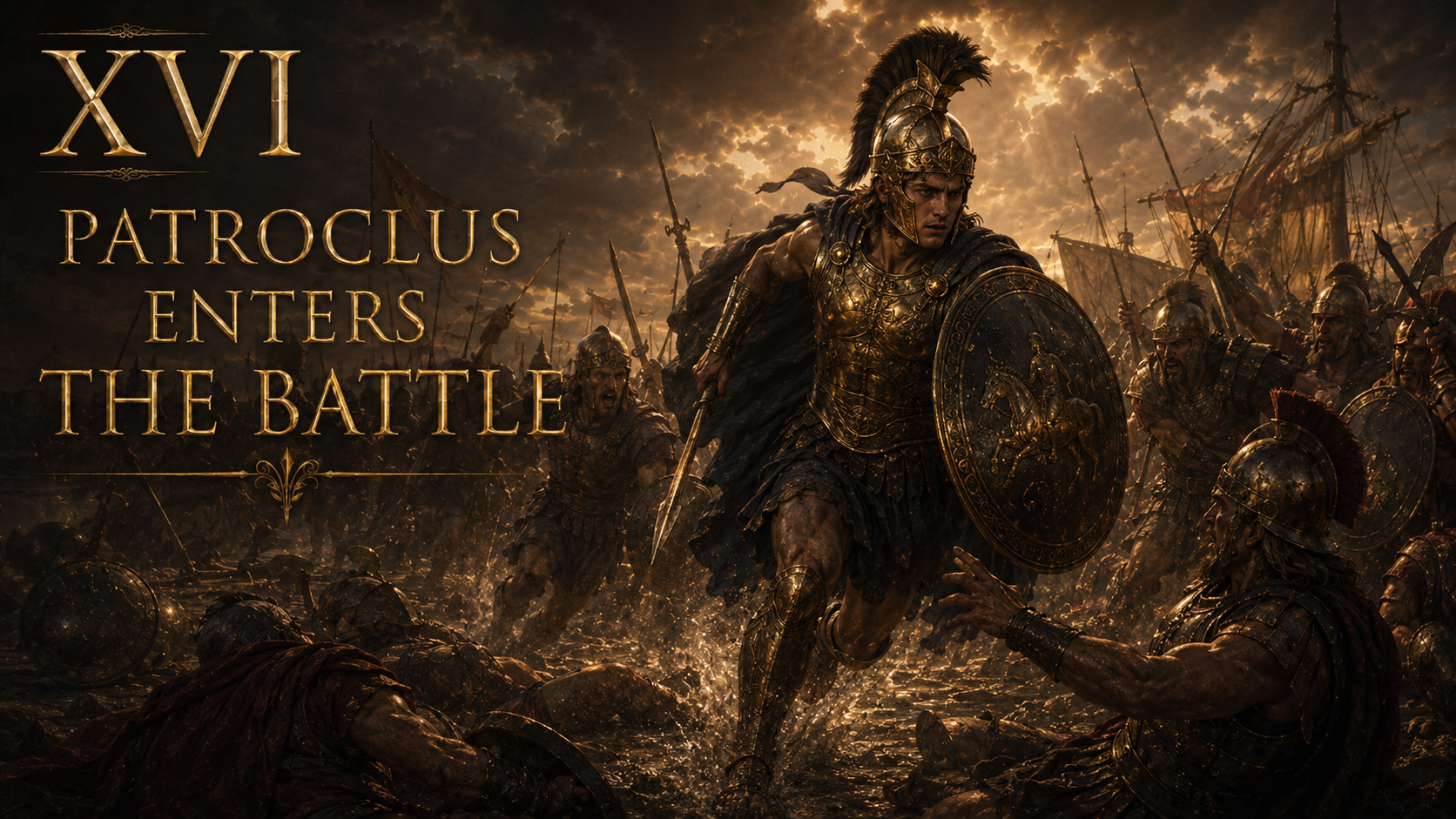
The ships were breathing behind him
The fire had lost its bite
Men were shouting through the smoke clouds
Like souls returned to light
He should have turned by the shoreline
He should have heard that voice
Win the day and leave the glory
Come back while you still have choice
But the plain kept opening wider
And the dust kept calling his name
Every fleeing spear before him
Fed the borrowed flame
One step too far
Past the smoke and the shore
One step too far
Where the hungry fields ask more
One step too far
With the warning lost behind
He had saved the ships from dying
But he would not draw the line
The Trojans ran like dry leaves
Before the bronze they feared
They saw Achilles in the sunlight
Though another heart was near
And Patroclus drove them harder
With compassion turned to storm
For the cries of dying comrades
Still were burning in his bones
Mercy wore the face of thunder
Pity learned the shape of war
And the farther that he followed
The less he knew what he came for
One step too far
Past the smoke and the shore
One step too far
Where the hungry fields ask more
One step too far
With the warning lost behind
He had saved the ships from dying
But he would not draw the line
There are borders made of timber
There are borders made of stone
There are borders in the spirit
Where a man must stand alone
There are victories that save you
There are victories that lie
There are cheers that sound like morning
While the evening gathers high
Achilles spoke beside the water
But battle has a louder tongue
And the words that once were iron
In the dust came all undone
One step too far
Past the smoke and the shore
One step too far
Where the hungry fields ask more
One step too far
With the warning lost behind
He had saved the ships from dying
But he would not draw the line
Toward the towers, toward the shouting
Toward the walls that watched in stone
Toward the place where gods lean closer
When a man is too alone
He was bright inside another
He was brave beneath that name
But the armor could not save him
From the hunger of the flame
Every stride became a question
Every blow became a door
And the answer waited silent
Where no friend had walked before
One step too far
Past the smoke and the shore
One step too far
Where the hungry fields ask more
One step too far
With the warning lost behind
He had saved the ships from dying
But he would not draw the line
Back by the tents the sea kept breathing
Back by the ships the wounded cried
Back where return was still a promise
Back where love had not yet died
But forward ran the borrowed thunder
Forward burned the borrowed light
Forward through the dust of glory
Forward into closing night
One step too far
Past the smoke and the shore
One step too far
Where the hungry fields ask more
One step too far
With the warning lost behind
He had saved the ships from dying
But he would not draw the line
One step too far
One cry too long
One victory more
And the road goes wrong
One step too far
Past mercy, past flame
A brave man running
Inside another man’s name
Translations
English
The original English lyrics are shown in the Lyrics section above.
Deutsch
Hinter Patroklos atmen die Schiffe wieder, das Feuer hat seine Zähne verloren. Nun wäre der Zeitpunkt zur Umkehr gekommen. Doch die Ebene öffnet sich, die Fliehenden nähren das geliehene Feuer, und Achilleus’ Worte werden im Schlachtlärm leiser.
Mitgefühl nimmt die Gestalt des Donners an. Patroklos treibt die Trojaner weiter, bis er selbst nicht mehr klar unterscheiden kann, wofür er ursprünglich gekommen ist. Es gibt Grenzen aus Stein und Holz – und Grenzen im Menschen, an denen er allein stehen muss.
Die Rüstung kann den Träger nicht vor der Maßlosigkeit des Sieges schützen. Jeder Schritt nach vorn wird zu einer Frage, deren Antwort dort wartet, wo kein Freund ihn mehr erreichen kann.
Español
Detrás de Patroclo las naves vuelven a respirar y el fuego ha perdido sus dientes. Este sería el momento de regresar. Pero la llanura se abre, los fugitivos alimentan la llama prestada y las palabras de Aquiles se apagan bajo el ruido de la batalla.
La compasión adopta la forma del trueno. Patroclo empuja más lejos a los troyanos hasta no distinguir con claridad el motivo por el que salió. Hay fronteras de piedra y madera, y fronteras interiores ante las que un hombre debe permanecer solo.
La armadura no puede proteger a quien la lleva de la desmesura de la victoria. Cada paso adelante se vuelve una pregunta cuya respuesta espera allí donde ningún amigo puede alcanzarlo.
Français
Derrière Patrocle, les nefs respirent de nouveau et le feu a perdu ses crocs. Ce serait l’instant du retour. Mais la plaine s’ouvre, les fuyards nourrissent la flamme empruntée et les paroles d’Achille s’effacent dans le bruit de la bataille.
La compassion prend la forme du tonnerre. Patrocle pousse les Troyens plus loin jusqu’à ne plus distinguer clairement la raison de son départ. Il existe des frontières de pierre et de bois, et des frontières intérieures devant lesquelles un homme doit se tenir seul.
L’armure ne peut protéger celui qui la porte de la démesure de la victoire. Chaque pas en avant devient une question dont la réponse attend là où aucun ami ne peut plus l’atteindre.
English
Patroclus’ overreach is not a simple change from goodness to vanity. The same responsiveness that made him answer the wounded now makes every further cry feel like another obligation. Mercy without a boundary can be consumed by the machinery of war and transformed into relentless violence.
The “one step” is therefore both small and enormous. No single movement explains the fall; danger gathers through repeated decisions that each seem continuous with the last. Tragedy enters when Patroclus mistakes momentum for necessity and can no longer hear the purpose that once gave his courage its measure.
Textual basis
Homer, Iliad, Book XVI, lines 684–725: Patroclus ignores Achilles’ command to return, drives toward Troy, and is repeatedly checked by Apollo before the city.
Reference edition used
Homer, Ilias. Griechisch–deutsch. Translated into German from the ancient Greek by Hans Rupé, 16th edition, Akademie Verlag, Berlin, 2013.
Deutsch
Patroklos’ Überschreitung ist kein einfacher Wechsel von Güte zu Eitelkeit. Dieselbe Empfänglichkeit, die ihn auf die Verwundeten antworten ließ, macht nun jeden weiteren Ruf zu einer neuen Verpflichtung. Barmherzigkeit ohne Grenze kann von der Kriegsmaschine verschlungen und in rastlose Gewalt verwandelt werden.
Der „eine Schritt“ ist deshalb zugleich klein und ungeheuer. Keine einzelne Bewegung erklärt den Sturz; die Gefahr wächst aus wiederholten Entscheidungen, von denen jede nur als Fortsetzung der vorherigen erscheint. Tragik beginnt, als Patroklos Bewegung mit Notwendigkeit verwechselt und den Zweck nicht mehr hört, der seinem Mut einst Maß gab.
Textgrundlage
Homer, Ilias, Gesang XVI, Verse 684–725: Patroklos missachtet Achilleus’ Rückkehrgebot, dringt gegen Troja vor und wird vor der Stadt wiederholt von Apollon zurückgewiesen.
Verwendete Referenzausgabe
Homer, Ilias. Griechisch–deutsch. Übertragen von Hans Rupé, 16. Auflage, Akademie Verlag, Berlin 2013.
Español
El exceso de Patroclo no es un simple cambio de bondad a vanidad. La misma sensibilidad que lo hizo responder a los heridos convierte ahora cada nuevo grito en otra obligación. La misericordia sin límite puede ser devorada por la maquinaria de la guerra y transformarse en violencia incesante.
Por eso el “paso” es a la vez pequeño e inmenso. Ningún movimiento aislado explica la caída; el peligro se acumula mediante decisiones repetidas que parecen continuar la anterior. La tragedia comienza cuando Patroclo confunde el impulso con la necesidad y deja de oír el propósito que daba medida a su valor.
Base textual
Homer, Ilíada, canto XVI, versos 684–725: Patroclo desoye la orden de regresar, avanza hacia Troya y Apolo lo rechaza repetidamente ante la ciudad.
Edición de referencia utilizada
Homer, Ilias. Griechisch–deutsch. Traducción alemana del griego antiguo de Hans Rupé, 16.ª edición, Akademie Verlag, Berlín, 2013.
Français
Le dépassement de Patrocle n’est pas un simple passage de la bonté à la vanité. La même sensibilité qui l’a fait répondre aux blessés transforme désormais chaque nouveau cri en obligation. Une compassion sans limite peut être absorbée par la machine de guerre et devenir violence incessante.
Le « pas » est donc à la fois minuscule et immense. Aucun mouvement isolé n’explique la chute ; le danger s’accumule par des décisions répétées qui semblent chacune prolonger la précédente. La tragédie commence lorsque Patrocle confond l’élan avec la nécessité et n’entend plus le but qui donnait une mesure à son courage.
Base textuelle
Homer, Iliade, chant XVI, vers 684–725: Patrocle néglige l’ordre de revenir, avance vers Troie et Apollon le repousse à plusieurs reprises devant la ville.
Édition de référence utilisée
Homer, Ilias. Griechisch–deutsch. Traduction allemande du grec ancien par Hans Rupé, 16e édition, Akademie Verlag, Berlin, 2013.