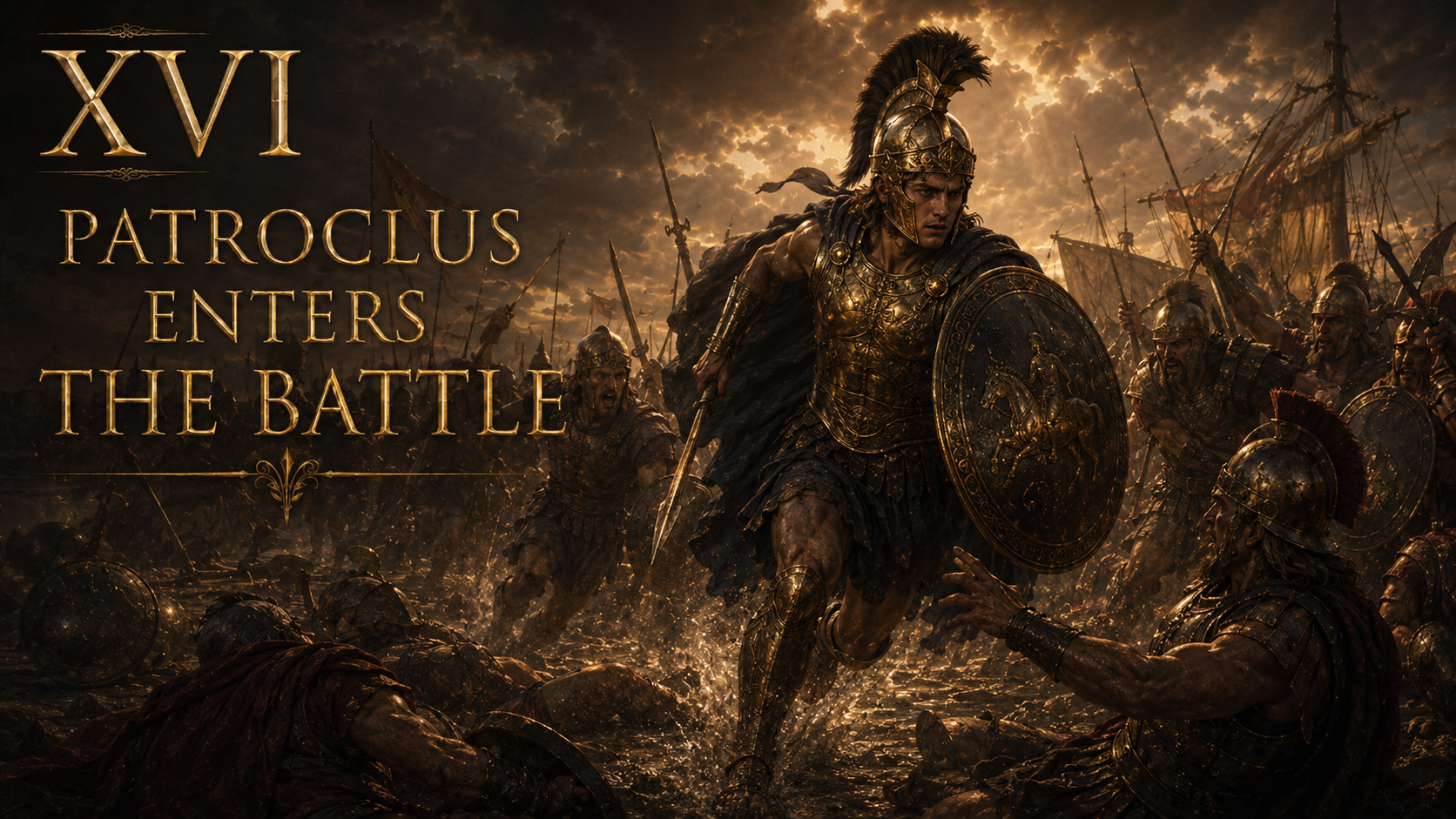
Lyrics
The ropes were black, the timbers crying
Fire was eating through the foam
Men were falling near the water
Far from fields they called their home
Then the bronze came like a morning
Through the choking battle haze
And the Trojans turned in terror
From that old familiar blaze
But the heart inside the armor
Was not hunger, was not pride
It was mercy under pressure
With the sea wind at his side
The shore breathes again
The black ships rise from the smoke
The shore breathes again
Where the burning cables broke
Push them back from the fire
Push them back from the foam
Let the wounded see the daylight
Let the living find their home
Spears went down like rain in darkness
Shields rang hard beneath the sun
Every man who thought he’d perish
Found his legs and learned to run
Hope came staggering from the ashes
Hope came bleeding through the sand
Hope had no fine golden trumpet
Only bronze in a borrowed hand
And the sea kept beating slowly
Like a heart that would not fail
While the smoke uncurled from heaven
Like a torn and dirty veil
The shore breathes again
The black ships rise from the smoke
The shore breathes again
Where the burning cables broke
Push them back from the fire
Push them back from the foam
Let the wounded see the daylight
Let the living find their home
No one asked him for a kingdom
No one crowned him in the flame
He just heard the cries of brothers
And he answered without name
Every step was hard and holy
Every blow was paid in breath
Every yard he won from ruin
Pulled the camp away from death
But the field beyond the rescue
Opened wide and called him on
And the line his friend had given
Started fading in the dawn
The shore breathes again
The black ships rise from the smoke
The shore breathes again
Where the burning cables broke
Push them back from the fire
Push them back from the foam
Let the wounded see the daylight
Let the living find their home
Smoke behind him, dust before him
Thunder borrowed, heart his own
He had saved the edge of morning
But the road had not turned home
Somewhere pride was dressed as duty
Somewhere courage lost its chain
Somewhere far beyond the shoreline
Glory whispered through the plain
Still the men behind him shouted
Still the ships stood scarred but free
Still the flames drew back defeated
From the black ribs by the sea
The shore breathes again
The black ships rise from the smoke
The shore breathes again
Where the burning cables broke
Push them back from the fire
Push them back from the foam
Let the wounded see the daylight
Let the living find their home
The shore breathes again
But the plain calls louder now
The shore breathes again
With a shadow on its brow
Push them back from the fire
Push them back from the foam
He has saved the ships from dying
But he has not turned for home
Translations
English
The original English lyrics are shown in the Lyrics section above.
Deutsch
Schwarze Taue, brennende Balken und fallende Männer bestimmen das Ufer, bis die bekannte Bronze durch den Rauch kommt. Die Trojaner wenden sich vor dem vermeintlichen Achilleus, doch im Inneren der Rüstung kämpft keine Gier, sondern Barmherzigkeit unter äußerstem Druck.
Die Achaier gewinnen ihre Beine und ihre Hoffnung zurück. Das Meer schlägt weiter wie ein Herz, während der Rauch von den Schiffen weicht. Patroklos wird nicht gekrönt; er hört lediglich die Rufe der Gefährten und antwortet mit jedem Schritt und jedem Atemzug.
Die Rettung ist vollbracht, aber jenseits des Ufers öffnet sich das Feld. Pflicht beginnt sich als Ruhm zu verkleiden, und der von Achilleus gesetzte Rückweg verblasst. Die Schiffe leben – Patroklos kehrt dennoch nicht um.
Español
Cabos negros, maderos ardientes y hombres caídos dominan la orilla hasta que el bronce conocido atraviesa el humo. Los troyanos se apartan ante el supuesto Aquiles, aunque dentro de la armadura no combate el hambre de gloria, sino la compasión sometida a una presión extrema.
Los aqueos recuperan las piernas y la esperanza. El mar continúa golpeando como un corazón mientras el humo abandona las naves. Nadie corona a Patroclo: oye las llamadas de sus compañeros y responde con cada paso y cada aliento.
El rescate se ha cumplido, pero más allá de la orilla se abre la llanura. El deber empieza a disfrazarse de gloria y el camino de regreso marcado por Aquiles se desvanece. Las naves viven, pero Patroclo no se vuelve.
Français
Cordages noircis, poutres en feu et hommes tombés dominent le rivage jusqu’à ce que le bronze familier traverse la fumée. Les Troyens fuient devant celui qu’ils prennent pour Achille, mais dans l’armure ne combat pas la soif de gloire : c’est la compassion poussée à l’extrême.
Les Achéens retrouvent leurs jambes et leur espoir. La mer continue de battre comme un cœur tandis que la fumée quitte les nefs. Personne ne couronne Patrocle : il entend les appels de ses compagnons et répond par chaque pas et chaque souffle.
Le secours est accompli, mais au-delà du rivage la plaine s’ouvre. Le devoir commence à se déguiser en gloire et le chemin du retour fixé par Achille s’efface. Les nefs vivent, pourtant Patrocle ne revient pas.
English
The saving of the ships is a genuine achievement, not merely the prelude to disaster. Patroclus restores breath, movement, and hope to men who had nearly accepted annihilation. The poem insists that his later error does not cancel the compassion or courage of this rescue.
At the same time, success changes the emotional landscape. The original purpose has been fulfilled, but momentum now supplies a new purpose of its own. The shore breathes again while Patroclus moves away from it; the very proof that he should return becomes the temptation to continue.
Textual basis
Homer, Iliad, Book XVI, lines 257–425: Patroclus and the Myrmidons drive the Trojans from the burning ships and pursue them across the trench.
Reference edition used
Homer, Ilias. Griechisch–deutsch. Translated into German from the ancient Greek by Hans Rupé, 16th edition, Akademie Verlag, Berlin, 2013.
Deutsch
Die Rettung der Schiffe ist eine wirkliche Leistung und nicht bloß das Vorspiel zur Katastrophe. Patroklos gibt Männern Atem, Bewegung und Hoffnung zurück, die ihre Vernichtung beinahe schon hingenommen hatten. Sein späterer Fehler löscht weder das Mitgefühl noch den Mut dieser Rettung aus.
Zugleich verändert der Erfolg die seelische Landschaft. Der ursprüngliche Zweck ist erfüllt, doch die Bewegung erzeugt einen neuen Zweck aus sich selbst. Das Ufer atmet wieder, während Patroklos sich von ihm entfernt; gerade der Beweis, dass er umkehren sollte, wird zur Versuchung weiterzugehen.
Textgrundlage
Homer, Ilias, Gesang XVI, Verse 257–425: Patroklos und die Myrmidonen vertreiben die Trojaner von den brennenden Schiffen und verfolgen sie über den Graben.
Verwendete Referenzausgabe
Homer, Ilias. Griechisch–deutsch. Übertragen von Hans Rupé, 16. Auflage, Akademie Verlag, Berlin 2013.
Español
Salvar las naves es un logro verdadero y no un simple preludio de la catástrofe. Patroclo devuelve aliento, movimiento y esperanza a hombres que casi habían aceptado su aniquilación. Su error posterior no borra la compasión ni el valor de este rescate.
Al mismo tiempo, el éxito transforma el paisaje emocional. El propósito original se ha cumplido, pero el impulso produce un propósito nuevo. La orilla respira de nuevo mientras Patroclo se aleja; la misma prueba de que debería volver se convierte en tentación para continuar.
Base textual
Homer, Ilíada, canto XVI, versos 257–425: Patroclo y los mirmidones expulsan a los troyanos de las naves incendiadas y los persiguen más allá del foso.
Edición de referencia utilizada
Homer, Ilias. Griechisch–deutsch. Traducción alemana del griego antiguo de Hans Rupé, 16.ª edición, Akademie Verlag, Berlín, 2013.
Français
Le salut des nefs est un accomplissement véritable, non un simple prélude au désastre. Patrocle rend souffle, mouvement et espoir à des hommes qui avaient presque accepté leur anéantissement. Son erreur ultérieure n’efface ni la compassion ni le courage de ce secours.
Dans le même temps, le succès transforme le paysage intérieur. Le but initial est atteint, mais l’élan produit un but nouveau. Le rivage respire tandis que Patrocle s’en éloigne ; la preuve même qu’il devrait revenir devient la tentation de poursuivre.
Base textuelle
Homer, Iliade, chant XVI, vers 257–425: Patrocle et les Myrmidons chassent les Troyens des nefs en feu et les poursuivent au-delà du fossé.
Édition de référence utilisée
Homer, Ilias. Griechisch–deutsch. Traduction allemande du grec ancien par Hans Rupé, 16e édition, Akademie Verlag, Berlin, 2013.